Showing posts with label Photography. Show all posts
Showing posts with label Photography. Show all posts
Thursday, July 17, 2008


Monday, July 14, 2008
Photo Ethics
"Any change to a news photo - any violation of that moment - is a lie. Big or small, any lie damages your credibility." --John Long, NPPA co-chair
Recap
We spoke in class the other day about ethical photography and photo editing. Together, we looked at and discussed some examples of unethical photo manipulations throughout history. Here are a couple definitions I want to make sure you understand:
Imposing Meaning
The act of manipulating or altering a photograph in a way that adds a message that is not already present in the image. This typically occurs during editing, but can also occur during shooting.
Obscuring Meaning
The act of manipulating or altering a photograph in a way that intentionally masks or obfuscates the information present in the photograph. Again, this can occur in editing (for example, cropping out a person who is affecting the behavior of another person in frame) or during shooting (simply by not including important elements in the frame, or by framing a photograph in a way that creates a relationship between two unrelated subjects).
So what can you change when editing a photograph? You may adjust brightness and contrast, or "dodge" and "burn" (darken or lighten areas of the photo). But you may only do so slightly, in a way that clarifies the image. You must not use these techniques to make a photo appear more dramatic (as in the case of the TIME Magazine cover featuring O.J. Simpson). You may crop a photo, but only if you do not remove any important information. Cropping is extremely dangerous territory. You are better of avoiding cropping all together. During our lesson, Pasqual mentioned that he only crops when he did not have time to switch from a wide lens, and thus the important information (the subject) is obscured (too small).
Homework
I would like you all to read Ethics in the Age of Digital Photography by John Long of the National Press Photographer's Association. Although it was written nearly a decade ago, the piece is still relevant. Long makes an interesting (and important) distinction between matters of taste and matters of ethics.
Resources and Supplementary Materials
Recap
We spoke in class the other day about ethical photography and photo editing. Together, we looked at and discussed some examples of unethical photo manipulations throughout history. Here are a couple definitions I want to make sure you understand:
Imposing Meaning
The act of manipulating or altering a photograph in a way that adds a message that is not already present in the image. This typically occurs during editing, but can also occur during shooting.
Obscuring Meaning
The act of manipulating or altering a photograph in a way that intentionally masks or obfuscates the information present in the photograph. Again, this can occur in editing (for example, cropping out a person who is affecting the behavior of another person in frame) or during shooting (simply by not including important elements in the frame, or by framing a photograph in a way that creates a relationship between two unrelated subjects).
So what can you change when editing a photograph? You may adjust brightness and contrast, or "dodge" and "burn" (darken or lighten areas of the photo). But you may only do so slightly, in a way that clarifies the image. You must not use these techniques to make a photo appear more dramatic (as in the case of the TIME Magazine cover featuring O.J. Simpson). You may crop a photo, but only if you do not remove any important information. Cropping is extremely dangerous territory. You are better of avoiding cropping all together. During our lesson, Pasqual mentioned that he only crops when he did not have time to switch from a wide lens, and thus the important information (the subject) is obscured (too small).
Homework
I would like you all to read Ethics in the Age of Digital Photography by John Long of the National Press Photographer's Association. Although it was written nearly a decade ago, the piece is still relevant. Long makes an interesting (and important) distinction between matters of taste and matters of ethics.
Resources and Supplementary Materials
- Written Materials:
- Ethics in the Age of Digital Photography (Read all the sections at on the left. If your internet connection is running slow, there is a plain text version here, but it lacks the example photos)
- DigitalCustom Model Ethics Guidelines (A detailed set of guidelines on photo ethics from a company that specializes in professional photo editing)
- The New York Times: Guidelines on Our Integrity(The section on photography is at the very bottom, but the whole thing is worth reading, as you all write as well)
- "The Camera Never Lies, but the Software Can" (A 2004 New York Times article about photo manipulation, in response to the fake John Kerry/Jane Fonda photo)
- "Research News From Applied Cognitive Psychology Suggests Photos Can Change History" (A news piece about the ACP study I mentioned in class. The actual study is not yet available online.)
- Photographic Examples:
- Photo Tampering Throughout History (A timeline that includes several of the examples we viewed in class, as well as an example from this past week!)
Tuesday, July 8, 2008
Friday, July 4, 2008
Thursday, July 3, 2008
Photojournalism Lesson #2 Recap & Homework
In Lesson Two, we discussed the concepts of lookspace and candid vs. posed photography. We also discussed methods of shooting people in public, such as: zooming in from afar, getting close and zooming out, and keeping the camera in front of your face after you take your shot. Then we headed outside to practice shooting people.
Here are some definitions and resources:
Lookspace
Space left in the photo in the direction the subject is facing.
A brief lesson on this: http://digital-photography-school.com/blog/give-your-subject-space-to-look-into/

Candid Photograph
Any photo in which the subject is unaware that their picture is being taken. Candid photos are used to capture natural behavior and events as they occur unaffected. The majority if news photographs are candid.
A few tips for shooting candid photos:
Posed Photograph
A photograph in which the subject is aware of the camera and presents his or herself. This sort of photo is often used to accompany a profile piece or an interview.
HOMEWORK
Here are some definitions and resources:
Lookspace
Space left in the photo in the direction the subject is facing.
A brief lesson on this: http://digital-photography-school.com/blog/give-your-subject-space-to-look-into/

Candid Photograph
Any photo in which the subject is unaware that their picture is being taken. Candid photos are used to capture natural behavior and events as they occur unaffected. The majority if news photographs are candid.
A few tips for shooting candid photos:
- Stand far away and zoom in
- Stand very close and zoom all the way out. Do not point the camera directly at the subject
- Turn off all camera sounds
- Do not use flash (sometimes you might need to, but remember that you will only have one chance)
Posed Photograph
A photograph in which the subject is aware of the camera and presents his or herself. This sort of photo is often used to accompany a profile piece or an interview.
HOMEWORK
- Take 5 candid photos of 5 different subjects.
- Approach 5 people you don't know and ask to take their picture.
Tuesday, July 1, 2008
Photojournalism Lesson #1 Recap & Homework
Today we went over the 6 basic framings of a photograph, the 3 (or 4!) different angles, the rule of thirds, and headroom. Here are the examples of each. Click on the photos to see a bigger version.
The Extreme Long Shot
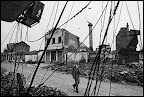
The Long Shot
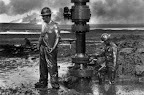
The Medium Shot
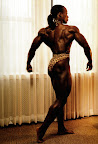
Medium Closeup
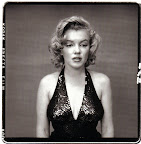
The Cloesup
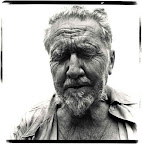
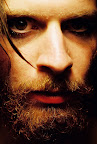
The Extreme Closeup
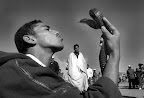
High Angle
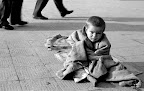
Low angle
Eye level
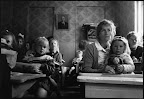
Rule Of Thirds
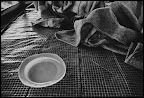
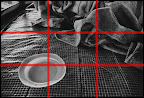
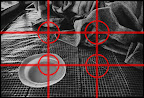
Using the Diagonal
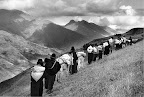
Examples of Unconventional Framing
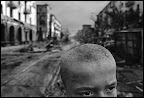
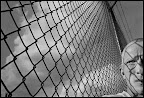
The Extreme Long Shot
The Long Shot
The Medium Shot
Medium Closeup
The Cloesup
The Extreme Closeup
High Angle
Low angle
Eye level
Rule Of Thirds
Using the Diagonal
Examples of Unconventional Framing
Monday, June 30, 2008
Subscribe to:
Posts (Atom)


 Posts
Posts


